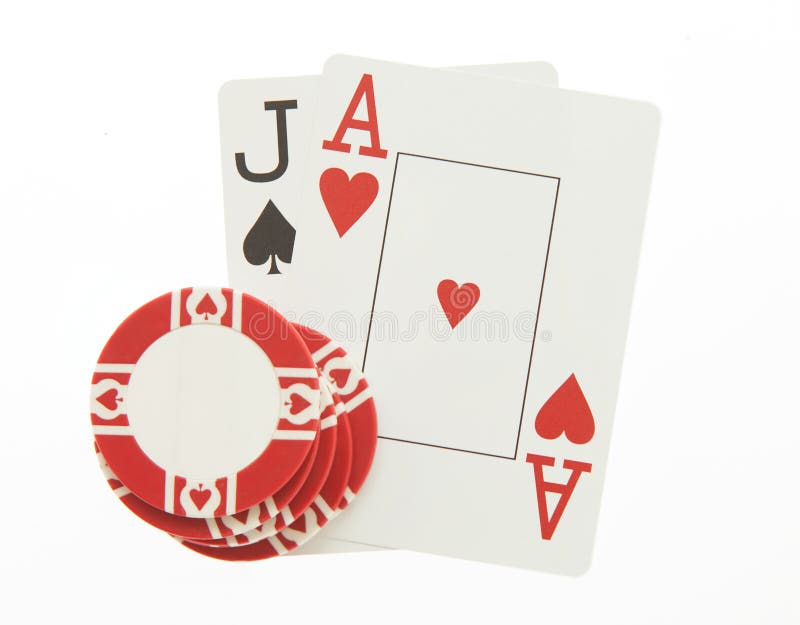
To get a blackjack, you need either an ace-ten combination, or a ten-ace combination. Order doesn’t matter, because either will have the same chance of happening. Your probability of getting an ace on your first card is 4/52. You have four aces in the deck, and you have 52 total cards. That reduces down to 1/13. Aces A pair of aces gives the blackjack player a starting hand value of either a 2 or a soft 12 which is a problematic starting hand in either case. Splitting aces gives a player two chances to hit 21. Splitting aces is so favorable to the player that most gambling establishments have rules limiting the player's rights to do so. Sticker – Blackjack Playing Card (3 Pack) $ 5.00 Add to cart; 25 Creedmoor Blackjack Spec Chambering Reamer (Dave Manson – Live Pilot – 0.115″ Freebore – 0.290″ Neck) $ 199.99. See full list on wizardofodds.com.
Ace-seven is by far the most difficult hand for the professional blackjack player to handle. Depending on what the dealer is showing, you will either hit, stand, or double down.
Basic Strategy tells us that we should double if the dealer is showing 3 through 6, stand on 2, 7, and 8, and hit on 9, 10, and A. This may come as a shock to some since common sense tells us to stay with an 18 regardless of what the dealer has. Let's look at the math behind the strategy.
Blackjack Ace Tracking
First, we must look at A-7 as a plain old 18. Basic Strategy dictates that we stand on a pat 18 regardless of what the dealer is showing; we want to get to 17 or higher and then let Lady Luck determine the outcome. This isn't necessarily the case for a soft 18.
- If the dealer is showing a 2, the return on an 18 is $.12 for each dollar invested.
- For 3 through 6, this jumps up ranging from $0.40 to $0.50 per dollar.
- 7 is also $0.40.
- At 8, it goes back down to $0.11.
- 9 through A plummets into a negative return of $0.18 to $0.10 loss per dollar.
So is it really worthwhile to go against the common sense factor and hit an 18 if the dealer is showing 9-A?
- Hitting A-7 on a dealers 9 gives us a negative return of $0.10,
- 10 a negative return of $0.14, and
- Ace a negative return of $0.09.
The spread here, while not seeming like much, is less than the -$0.18 to -$0.10 return of staying. To minimize the damage, hitting on these cards is a necessity.

Doubling is the third option with this hand. In this case, you count the hand as an 8 and pray for a 9 or 10, or you count it as an 18 and hope for an Ace through 3.
First of all, doubling when the dealer is showing:
- 9 through A gives us a -$0.29 to -$0.36 return, far greater of a loss than hitting. So doubling on those cards is out of the question.
- Doubling on 8 is also a negative return (-$0.03), whereas it's a positive return to hit. Again, out of the question.
- Doubling on 7 is a positive return of $0.22, which is less than the $0.40 you will get with staying. If the dealer is showing a 7, it makes economic sense to stand.
- Doubling on the dealer's 2 is also $0.12 return, but it is less than a cent less difference of a return than standing. In the long run, this adds up to major dollars, believe me. You will want to stay rather than risking the double in this case.
- That leaves 3 through 6. The math here gets tricky, so pay careful attention. The numbers above regarding standing on 18 don't take into account the power of the Ace. As you know, the Ace can be counted as either a 1 or an 11, and because of this, hitting on A-7 is not nearly as dangerous as hitting a pat 18. In fact, the 23% (3/13) chance of drawing a card to better your 18 makes the diminished return on doubling the right move.
While the return ranges from $0.18 to $0.38 (compared to the $0.40 to $0.50 of staying), the 23% odds of improving plus the doubled amount of money pumped into the hand make doubling the most profitable choice.

Best Blackjack Bonuses
These bonuses allow you to play blackjack to clear the bonuses wagering requirements.
- Intertops Casino Classic
100% Up To $/€100
Rating
4.3/54.4/54.2/54.3/5
- Liberty Slots Casino
100% Up To $/AU$259
Rating
3.8/54.4/53.3/53.8/53.8/5
- Lincoln Casino
100% Up To $/AU$1000
Rating
4.0/54.4/53.8/53.7/54.0/5
More on How to play Blackjack
Ace Tracking and Ace Side Counts are not black jack card counting methods on their own, but are actually extra counts that you can track along side your running count in order to improve the accuracy of your favorite system.
Ace Side Count
Black Jack Ace Value
This is done in one of two ways, depending on what card counting method you are using. For balanced counting systems like Hi-Lo Count and Hi-Opt I the correct way to perform an ace side count is to take the number of aces dealt divided by the number of decks remaining, similar to how you would convert a running count to the true count. The more aces remain, the higher your chances of getting a blackjack.
Ace side counts for non-balanced counting systems (like Zen Count or KO Count) are calculated in a different way and are used to increase the accuracy of playing strategy, particularly as to whether a player should take insurance.
Ace Tracking
Blackjack Ace Side Count
Ace tracking (also called “Shuffle Tracking”) is the approximate art of trying to determine when and where the ace will appear by paying attention to the cards directly underneath the ace, so that when the cards are picked up and shuffled the player can recognize the neighbor cards and bet that the ace will be next.
Players interested in ace tracking should check out Arnold Snyder’s The Blackjack Shuffle Tracker’s Cookbook.